Matale CocoaMatale Cocoa
Single-Origin Cacao·B2B + B2C·Premium Foods
Onboarding Q3 2026

Premium Single-Origin Cacao DACH market entry for Matale Cocoa — from organic certification to Specialty Retail.

Matale Cocoa is a third-generation family-owned single-origin cacao producer from the Matale District in Sri Lanka. As exclusive DACH partner, SELECTNOIR takes over the full market entry — both B2B for craft chocolatiers and B2C through Specialty Retail, D2C and Amazon Specialty.

Full 360

Mandate

B2B + B2C in parallel

Exclusive

DACH partner

DE · AT · CH

12 SKUs

Product lines

3 lines · single-estate

Q3 2026

Launch

Onboarding phase
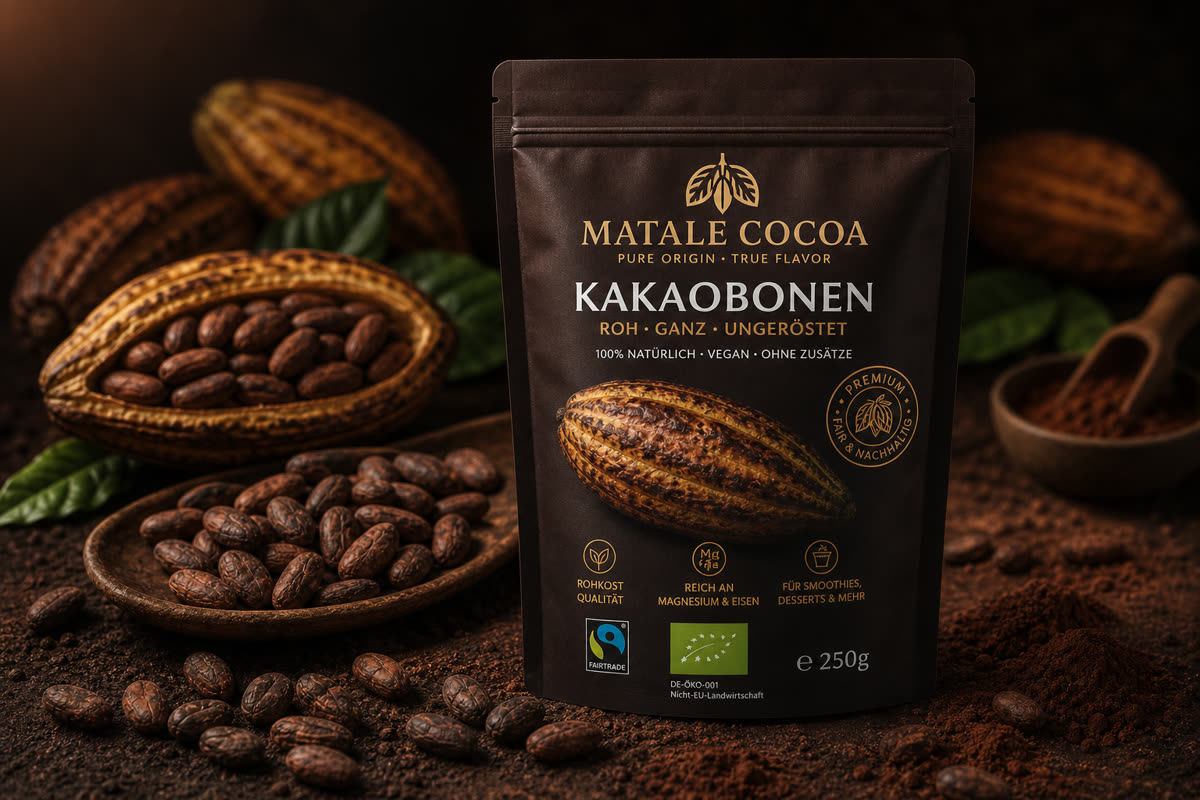
Matale Cocoa — Single-origin cacao from the Matale District, Sri Lanka

Matale Cocoa — Family-owned single-origin cacao plantation from Sri Lanka

At a glance

Client

Matale Cocoa

Matale, LK · 3rd generation

Category

Premium Foods

Single-origin cacao

Scope

Full 360

B2B + B2C market entry

Status

Onboarding

Start Q3 2026

01 · The client

A family-owned plantation from Sri Lanka. Three generations of experience, a clear DACH ambition.

Matale Cocoa is run by a third-generation family in the Matale District of Sri Lanka's Western Province. The plantation sits in the classic Ceylon cacao belt — on volcanic soils, with a year-round stable microclimate and a varietal spectrum that competes sensorically with the great single-origin regions of Madagascar and Ecuador. The family controls the entire value chain in-house, from cultivation through fermentation to drying.

The portfolio comprises three core lines: the Single-Estate bar range as 70%–85% single-origin chocolates, the Pandura Reserve as raw fermented beans for Bean-to-Bar makers and the Matale Drinking Cocoa as an unsweetened premium drinking cocoa. Twelve SKUs at launch — staggered for B2B and B2C in parallel.

Across Sri Lanka, Japan and Singapore, Matale Cocoa is established with Specialty chocolatiers and top hotels. The European market — and especially the quality- and origin-sensitive DACH region — has been white space until now. That is exactly where the partnership with SELECTNOIR begins: DACH as the first structured EU market, with two parallel sales tracks.

70%–85% · 100g bars

Single-Estate bar range

Bean-to-Bar · raw beans

Pandura Reserve beans

Premium drinking cocoa

Matale Drinking Cocoa

Sample programme

Cupping & tasting sets

02 · The starting point

An exceptional bean is not enough. DACH is a food-law minefield.

Premium foods with third-country origin, organic claims and direct sales to German end consumers and specialty trade — that is one of the most demanding food segments from a regulatory standpoint. Every step from customs clearance through labelling to advertising triggers several EU and German regulations at the same time.

For a Sri Lankan family business that means: before the first bar reaches a Manufactum shelf or the first sample box arrives at a Bean-to-Bar maker in Berlin, organic equivalences must be recognised, labels translated in line with the Lebensmittelinformationsverordnung (EU food information regulation), allergens declared and the cold-chain logistics built up. Anyone who cuts corners here risks regulatory complaints, sales bans — and in the premium segment, lasting reputational damage.

The compliance matrix for premium cacao in DACH

EU organic / DE-ÖKO

Recognition of the Sri Lanka organic certification as EU organic equivalence

Rainforest Alliance

Parallel certification track as a trust signal for Specialty Retail

LMIV / EU 1169/2011

Lebensmittelinformationsverordnung (EU food information regulation) — labels, nutrition, mandatory information in German

Origin declaration

Country-of-origin labelling for the Sri Lankan origin on every package

Allergen labelling

Traces of milk, soy, tree nuts correctly declared

VerpackG

German Packaging Act — LUCID registration plus participation in a dual system

EU contaminant limits

Cadmium thresholds (Reg. 2023/915) for cacao products — lab analysis per batch

Customs & EORI

Import handling, veterinary and phytosanitary clearance, EORI number, REX registration

That is the list before the first bean reaches a German warehouse. For a family business from Sri Lanka entering DACH for the first time, every one of these items is open — and any single one can delay the launch or block individual channels.

03 · The plan

Three phases to a DACH market presence.

Phase 1

·

Month 1–4

Organic certification & compliance

Before anything is sold, we make the product DACH-legal. It is not glamorous — it is the foundation without which nothing in the premium food segment moves.

  • EU organic equivalence application of the Sri Lanka certification via a German organic control body
  • Parallel Rainforest Alliance certification track — as a trust signal for Manufactum, KaDeWe, Bio COMPANY
  • LMIV-compliant label production: nutrition, allergens, origin, best-before in German
  • Cadmium and heavy-metal analysis per batch in an accredited German food laboratory
  • LUCID registration with the Packaging Register + contract with a dual system
  • Building the import chain: customs, REX registration, climate-controlled warehouse in Fulda (16–18°C, 55–65% rH)

Phase 2

·

Month 5–8

Brand & launch

With a clean compliance foundation we position Matale Cocoa as a curatorial single-origin brand in the DACH premium segment — through two sales tracks built in parallel.

  • DACH brand positioning: curatorial single-origin narrative, origin storytelling around the Matale District
  • First conversations with Manufactum, KaDeWe Feinschmeckeretage, Bio COMPANY for B2C Specialty Retail
  • B2B craft chocolatier outreach: 8 Bean-to-Bar makers in DE/AT/CH with curated sample programmes
  • Cupping and tasting events in Berlin, Hamburg, Vienna — invited specialty buyers and trade press
  • Amazon Pantry / Specialty Brand Registry, listing production, A+ content for the bar range and drinking cocoa
  • Shopify D2C setup with German hosting, GDPR-compliant checkout, German customer support from Fulda
  • Translation and localisation of all product brochures, origin sheets and datasheets into German

Phase 3

·

Month 9–18

Scale & specialty leadership

Scaling phase: repeat orders from the first B2B partners, broader Specialty Retail distribution, building the brand as the reference name for Sri Lankan single-origin in DACH.

  • Lift B2B repeat rate to 70% — ongoing relationships with the 8 pilot chocolatiers
  • Grow the Specialty Retail network to 5 houses: Manufactum, KaDeWe, Bio COMPANY plus 2 further premium chains
  • Editorial and PR strategy: feature placements in Falstaff, Effilee, Slow Food Magazin, Garcon
  • EU rollout preparation: expansion into NL, FR, SE based on DACH learnings
  • Warehouse and logistics scaling: second climate-controlled chamber, 24–48h shipping across DACH
  • Establish a dedicated trade brochure and an annual cupping event as an industry reference

04 · Strategic decisions

Why we go this route and no other.

Why B2B and B2C in parallel — and not sequentially?

Single-origin cacao has two fundamentally different audiences with different buying cycles: Bean-to-Bar makers test for months and then place large recurring orders. Specialty B2C buyers decide in seconds at the Manufactum shelf. Building both channels sequentially would burn 12 months of market time — and the curated brand story only works when both tracks validate each other.

Why Sri Lanka — and not the established Madagascar or Ecuador?

Madagascar and Ecuador are already well-occupied in the DACH specialty segment. Sri Lankan cacao — and especially from the Matale District — is sensorically competitive but narrative white space in the DACH market. That is precisely what makes the positioning unique: not yet another Madagascar, but a new origin story for German specialty buyers.

Why dual certification — EU organic plus Rainforest Alliance?

EU organic is the regulatory entry threshold for Bio COMPANY and large parts of Specialty Retail. Rainforest Alliance is the additional trust signal for premium buyers at Manufactum and KaDeWe, who expect a social and ecological storyline beyond the pure organic seal. Running both certifications in parallel is more expensive in setup — but opens the entire specialty spectrum.

Why a climate-controlled warehouse in Fulda instead of drop-shipping from Sri Lanka?

Premium chocolate tolerates neither temperature swings nor long transit times to the end customer. 24–48h shipping from a climate-controlled German warehouse (16–18°C, 55–65% rH) is not optional — it is the precondition for the product reaching the specialty buyer at the promised quality. The warehouse investment is part of the brand promise.

05 · The channel strategy

Five channels. Three audiences. One brand.

We do not enter one channel after another — we go in parallel into all the relevant ones, with a clear mapping of product to audience to channel.

Premium placement

Manufactum

Products: Single-Estate bar range
Focus: Curatorial Specialty Retail, print catalogue, DACH store network

Flagship listing

KaDeWe Feinschmeckeretage

Products: Single-Estate · Drinking Cocoa
Focus: Berlin, Munich, Hamburg — top-tier premium food hall

Bio specialty

Bio COMPANY

Products: Single-Estate organic line
Focus: Organic Specialty Retail Berlin/Brandenburg, EU organic required

B2B lead channel

B2B craft chocolatiers

Products: Pandura Reserve beans
Focus: 8 Bean-to-Bar makers in DE/AT/CH, curated sample programme

Reach channel

Amazon Specialty / Pantry

Products: Bar range · Drinking Cocoa
Focus: Reach, Brand Store, A+ content, German reviews

Direct channel

D2C Shopify

Products: All product lines
Focus: Direct channel for margin, storytelling and subscription

06 · Our goals

How we want to be measured.

Results take time. Until then, these are the target metrics we hold the work to over the first 18 months.

8

B2B craft partners

Bean-to-Bar in DE · AT · CH

5

Specialty Retail

Manufactum, KaDeWe, Bio COMPANY +2

12

SKUs launched

Three product lines

DE-ÖKO

Organic recognised

Plus Rainforest Alliance

3

Cupping events

Berlin, Hamburg, Vienna

24–48h

DACH shipping

Climate-controlled from Fulda

07 · Risks & plans

What can go wrong — and how we handle it.

Risk

Organic equivalence application is delayed or rejected

Our plan

We start the application with an experienced German organic control body in week 2 — and run the Rainforest Alliance track in parallel, so launch via Manufactum and KaDeWe stays possible even if the EU organic seal arrives later. Bio COMPANY and similar pure-organic houses are only supplied after recognition.

Risk

Cadmium thresholds (EU 2023/915) are exceeded

Our plan

Per-batch lab analysis in an accredited German food laboratory before delivery. If thresholds are exceeded, the batch is quarantined and a blending strategy is defined with the family in Sri Lanka. No risk transfer to the end customer — a premium brand allows zero complaints.

Risk

The cold chain breaks between Sri Lanka and the German warehouse

Our plan

Reefer containers for sea freight with temperature loggers per batch, documented hand-over into the climate-controlled Fulda warehouse (16–18°C, 55–65% rH), spot checks at goods receipt. If deviations are detected, the affected batch is not released into the specialty channel.

Risk

B2B buyers (Bean-to-Bar) test for months without ordering

Our plan

Structured sample programme with clear next steps: sample → cupping → trial order → annual volume. Maximum two sample iterations per buyer, then a decision. In parallel we build an early cupping event that accelerates buyers into ordering mode.

Risk

Specialty Retail buyers decide conservatively — Sri Lanka is new

Our plan

We invest in origin storytelling: family portrait, plantation imagery, sensory dossier, cupping notes per batch. First conversations with Manufactum and KaDeWe are run with complete origin kits, not anonymous sample bags. Specialty buyers buy story, not just bean.

08 · The first 120 days

What happens next.

The partnership starts in Q3 2026. Here is the concrete agenda for the first four months — before anything goes onto a shelf.

Week 1–2

Kickoff & audit

Plantation audit, varietal mapping, roadmap alignment with the family in Matale.

Week 3–8

Organic certification

EU organic equivalence application, Rainforest Alliance audit, cadmium lab analysis in parallel.

Week 9–12

Labels & logistics

LMIV-compliant label production, LUCID, reefer container planning, Fulda warehouse setup.

Week 13–16

Brand setup

First conversations with Manufactum/KaDeWe/Bio COMPANY, B2B sample dispatch to 8 chocolatiers.

Premium DACH market entry — with full responsibility?

We bring international premium producers
into the DACH market — curatorially and sustainably.